Smart Manufacturing in APAC: A Practical Roadmap from Plant Data to Operational Decisions
A factory dashboard can show a deteriorating machine without helping anyone decide when to repair it. That gap between visibility and action deserves more attention than another analytics demonstration. In McKinsey’s 2025 survey of 101 senior operating executives, 46% reported limitations in their data or IT/OT systems. The sample included APAC manufacturers, although the finding is global, not a regional estimate.[1]
For APAC enterprises, the practical response is to build around an operational decision, validate it at one plant, and establish what must change before deployment elsewhere.
Smart manufacturing should connect equipment data, production context, analysis, and accountable action. The roadmap below proposes how to build that chain, drawing on TMA’s published manufacturing solutions and delivery evidence.
1. Define the operational problem first
Start with a decision statement: “The maintenance planner needs to identify which assets require inspection before the next production run.”
Then specify the decision owner, available response window, evidence required, and financial consequence of acting incorrectly. This makes the investment review concrete: which loss will the system address, and who can prevent it?
TMA Innovation’s manufacturing portfolio spans maintenance, quality, energy, warehouse, environmental, and facility management, with published integration capabilities covering MES, ERP, and SCADA.[2] Use those domains to identify the relevant workflow before selecting technology.
For a maintenance pilot, establish baseline unplanned downtime, repair duration, maintenance expenditure, and spare-parts availability. For quality inspection, record defect escapes, false rejects, rework, and inspection time. Treat these as proposed measurement categories; set targets using the plant’s actual operating history.
Agree on denominators and exclusions before development. For example, distinguish scheduled production time from calendar time and planned shutdowns from unexpected failures. Require operations and finance to approve the baseline together.
2. Map the factory data-to-action chain
TMA’s predictive-maintenance offering describes analysis of vibration, temperature, and sound, alongside historical telemetry, asset management, diagnostics, and recommendations.[3] These capabilities provide a starting point for designing the following deployment pipeline.
A practical technical deployment pipeline
- Define the contract: Document the asset, failure mode, decision owner, response deadline, and acceptance criteria.
- Connect equipment: Inventory sensors, controllers, interfaces, and permitted access. Begin with approved read-only acquisition.
- Validate signals: Check timestamps, units, missing readings, sensor calibration, and equipment identifiers.
- Add context: Associate observations with operating state, product, batch, shift, and maintenance history.
- Develop decision logic: Compare an interpretable rules baseline with predictive models using representative production conditions.
- Integrate action: Route findings into an assigned inspection or maintenance workflow, with acknowledgement and escalation.
- Verify and release: Test abnormal inputs, interrupted connectivity, recovery, access controls, and rollback before production acceptance.
This is a recommended implementation sequence, rather than a claim that every published TMA deployment uses identical components.
Specify the architecture before choosing products
Use the following comparison as a design checklist. The modern column describes proposed requirements, not a universal specification for every factory.
| Architecture dimension | Fragmented baseline to assess | Proposed production architecture |
|---|---|---|
| Equipment connectivity | Separate device-specific scripts | Managed adapters with documented interfaces |
| Data identity | Inconsistent machine names | Governed plant, line, and asset hierarchy |
| Event handling | Latest value only | Timestamped events with quality indicators |
| Connectivity failure | Undefined recovery behaviour | Local buffering and tested reconciliation |
| Operational response | Dashboard notification | Assigned task, escalation, and closure record |
| Deployment | Manual configuration | Versioned releases and site configuration |
Protect the boundary between analysis and control. NIST’s OT security guidance explicitly addresses performance, reliability, and safety, including segmentation and controlled changes to control logic.[4] Accordingly, keep safety functions within approved control systems, separate analytics access, and require engineering validation before enabling equipment commands.
3. Assess plants separately
Before approving regional rollout, require a readiness assessment for every site. Examine equipment interfaces, network conditions, maintenance records, cybersecurity ownership, operator workflows, and support coverage.
Ask each plant to demonstrate a complete example: identify an asset, retrieve its readings, explain its operating state, assign an intervention, and record the outcome. Use any missing step to define the site’s implementation backlog.
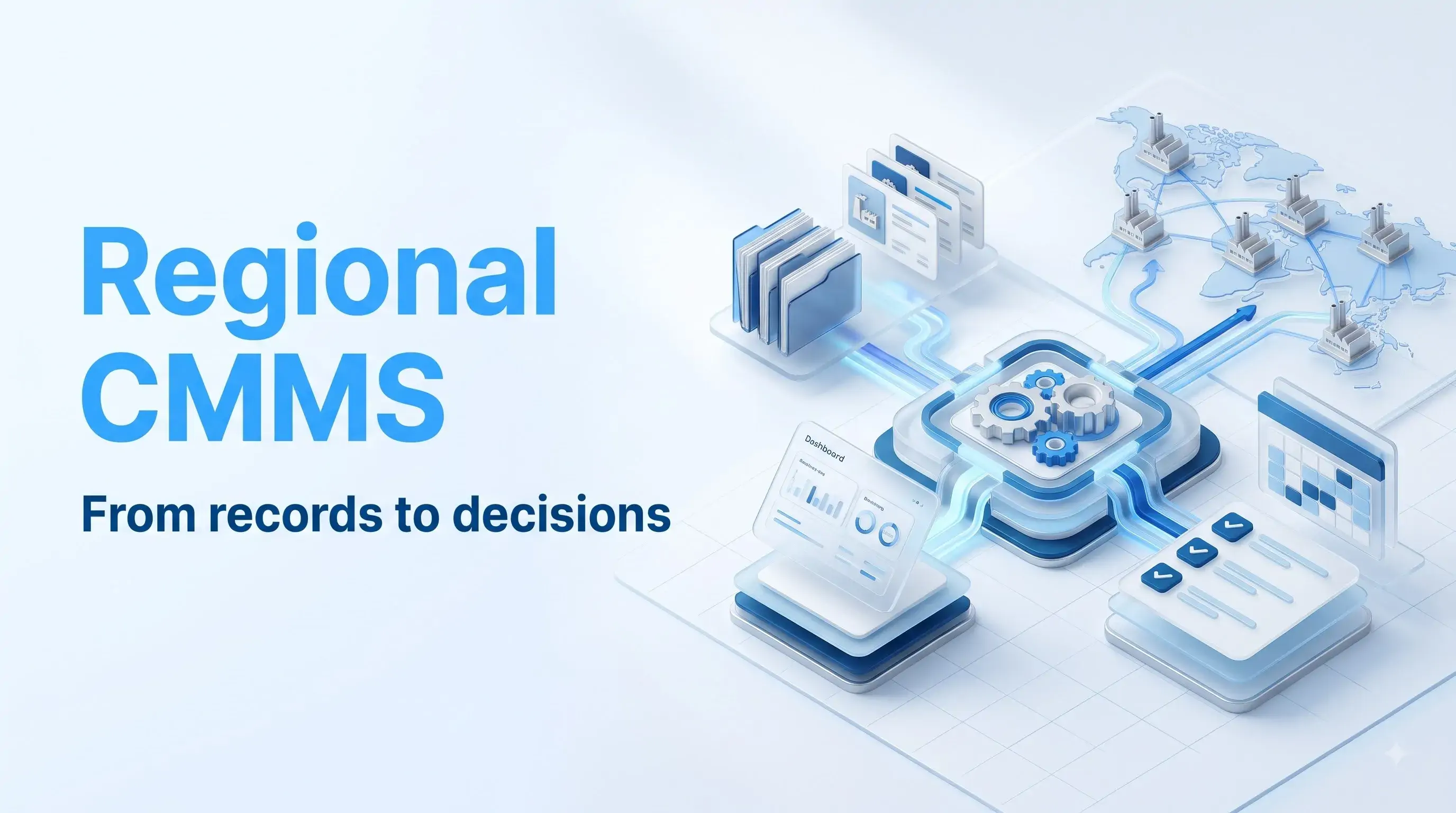
TMA’s SCMMS case for a nutritional ingredient manufacturer in Singapore illustrates this broader scope. The reported challenges included scattered information, manual processes, unexpected downtime, and missing spare parts. TMA describes a centralized platform combining hierarchical asset records, maintenance management, inventory alerts, and reporting.[5]
Lessons Learned from the Field
The distinctive lesson from this case is the connection between equipment maintenance and parts availability. The solution addressed the practical dependency between identifying work and having the resources to complete it.[5]
Apply that lesson during acceptance: require the team to demonstrate how an identified problem becomes executable work, including ownership, parts checks, and closure evidence.
This also provides a fair test of a low-cost, execution-only ODC proposal: does its scope end at ingestion and dashboards, or include the operational workflow? Evaluate the contracted responsibility and demonstrated engineering, rather than assuming quality from price.
TMA reports qualitative benefits for the Singapore project but publishes no numerical ROI on the cited page.[5] Buyers should request reference discussions and project-specific evidence before adopting benefit estimates.
4. Choose a pilot with a measurable decision
Select a bounded use case with accessible data, an accountable plant owner, and a practical intervention. A suitable pilot brief might ask: “Should the technician inspect this motor before the next scheduled run?”
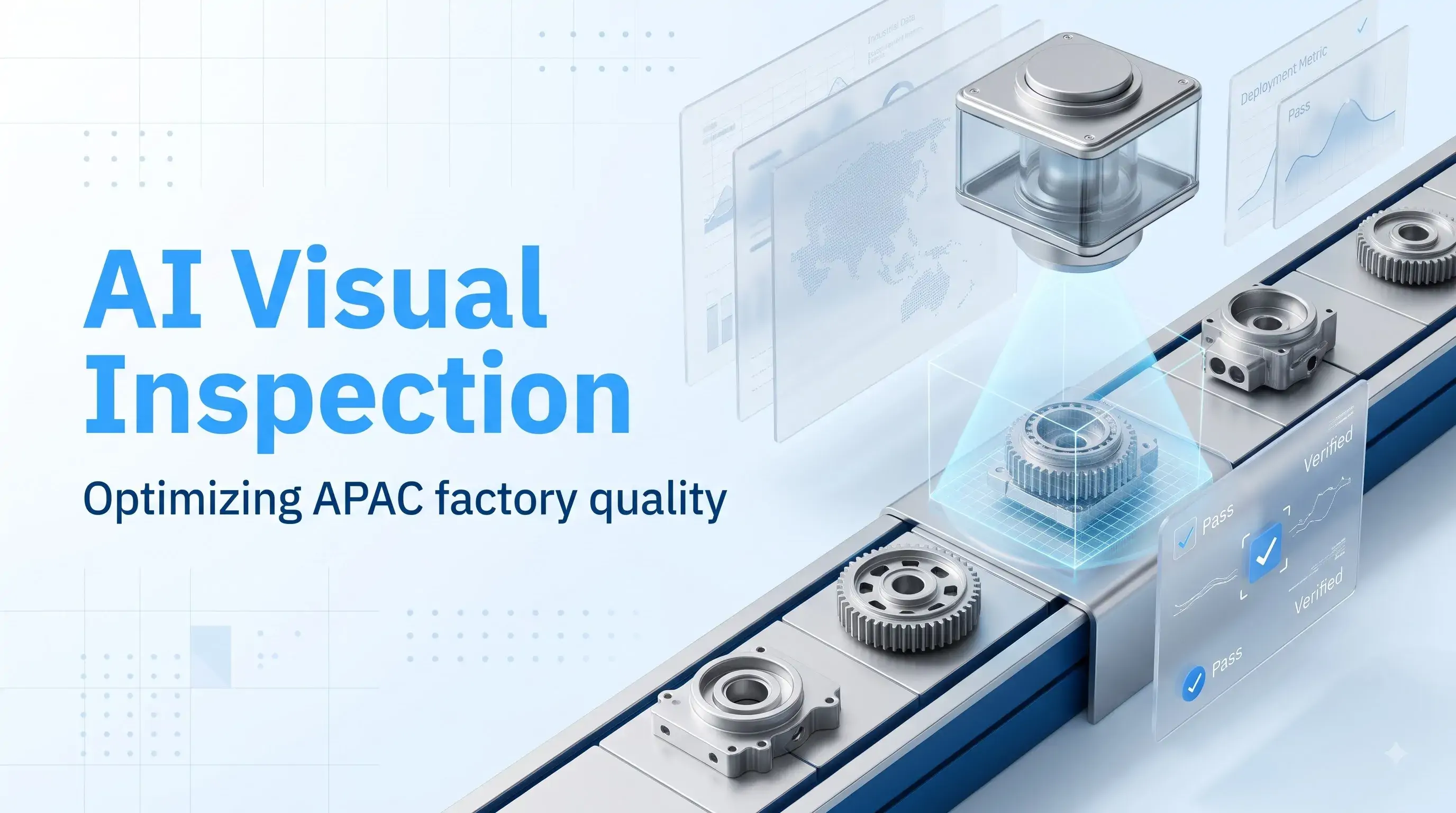
For inspection projects, TMA’s published engineering guidance identifies lighting, camera placement, line speed, defect definitions, false rejects, and traceability as design considerations.[6] Apply the same discipline to maintenance: define the physical conditions and operational consequences before optimizing a model.
Use a joint scorecard covering:
- Data readiness: Completeness, timestamp consistency, and correct asset mapping.
- Decision quality: Confirmed findings, missed events, and unnecessary interventions.
- Workflow performance: Acknowledgement, inspection completion, and escalation.
- Business value: Verified downtime, scrap, or maintenance cost changes.
- Operability: Recovery, support effort, and rollback readiness.
Define thresholds with the plant before implementation. Keep technical accuracy and business impact as separate acceptance gates.
For the business case, subtract implementation and ongoing operating costs from verified benefits. Include sensors, integration, connectivity, support, and model maintenance. Have finance review attribution, including changes in production volume and product mix, before approving expansion.
5. Design for regional scaling early
Use the pilot to establish a reusable deployment package: interface specifications, asset definitions, test evidence, monitoring, access controls, support procedures, and operator training. Record site differences explicitly through configuration and approved extensions.
Assign ownership for regional standards and local acceptance. Require each rollout to pass its own readiness and recovery checks.
TMA reports 29 years of engineering experience, 4,000 engineers, customers in 30 countries, and delivery of mission-critical applications involving hundreds of engineers.[7] Its telecom practice also publishes R&D-center capabilities for leading companies.[8] This supports evaluating TMA for a progression from implementation into a long-term R&D partnership; manufacturing-specific staffing and service commitments should still be established contractually.
Governance deserves equally concrete evidence. TMA publishes a quality foundation including ISO/IEC 27001, while its CSR reporting describes GDPR checks within software quality assurance.[9][10] During procurement, verify current certification scope and request the controls applicable to the proposed service. For regional deployment, document data locations, access, retention, and applicable privacy obligations with the customer’s compliance team.
FAQ
Can smart manufacturing work with existing MES and SCADA systems?
Yes. TMA publishes integration capabilities covering MES, ERP, and SCADA. Validate the actual interfaces, permissions, and data definitions during discovery before committing to deployment scope.[2]
Which data should a predictive-maintenance pilot collect?
Start with signals relevant to the chosen failure mode, linked to asset identity and operating context. TMA’s offering includes vibration, temperature, and sound analysis; select and validate sensors against the equipment and maintenance decision.[3]
Should AI automatically stop production equipment?
Require a documented safety assessment and approved control design before enabling commands. NIST’s OT guidance emphasizes safety, reliability, segmentation, and controlled logic changes. Begin the pilot with reviewed recommendations and clearly assigned intervention authority.[4]
How should manufacturers evaluate vendor reliability?
Request relevant references, named architecture ownership, current certification scope, recovery demonstrations, and contractual support responsibilities. TMA publishes large-project delivery experience and security practices; verify how those capabilities apply to your factory and proposed team.[7][9][10]
When should a pilot expand to other plants?
Set expansion gates covering decision quality, verified value, operator adoption, recovery, and site readiness. Require evidence against those gates and a costed rollout package before authorizing the next plant.
Turn the roadmap into an operating capability
Begin with one consequential decision and build the evidence chain needed to make it reliably. Expand through repeatable engineering and accountable plant ownership.
Engage TMA Innovation for a focused discovery workshop to define the decision, assess plant readiness, and produce a measurable pilot brief with architecture, acceptance gates, and rollout costs.
References
[1] McKinsey — From pilots to performance: How COOs can scale AI in manufacturing, December 2025.
[2] TMA Innovation — Smart Manufacturing Solutions.
[3] TMA Innovation — Predictive Maintenance.
[4] NIST — Guide to Operational Technology Security, SP 800-82 Rev. 3, September 2023.
[5] TMA Innovation — SCMMS and Singapore Production Maintenance Case Study.
[6] TMA Solutions — AI Visual Inspection for Manufacturing QA/QC.
[7] TMA Solutions — Company Overview and Delivery Capabilities.
[8] TMA Solutions — Telecommunications Software Development.
[9] TMA Solutions — Cybersecurity Software Development Services.
[10] TMA Solutions — CSR Report 2024.