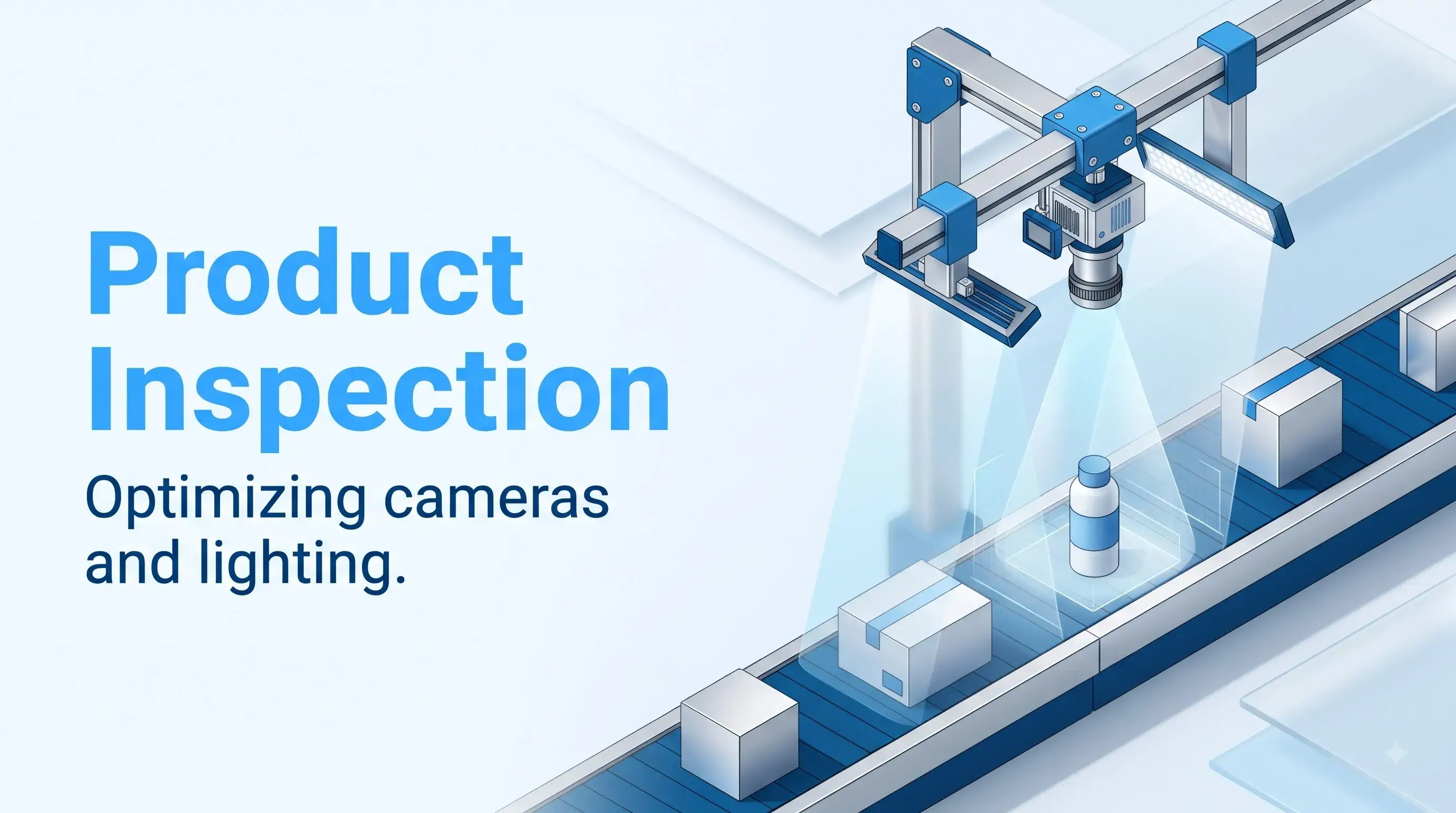
AI and AOI for APAC Electronics Suppliers: Scope FPCB Inspection for Production
When automated optical inspection (AOI) flags a flexible printed circuit board (FPCB), someone has to decide whether to release it, rework it, or hold it for review. Adding AI changes that decision process, so access to machine data and control over board disposition matter as much as detection performance. The World Economic Forum reports that Ingrasys deployed custom AI models across 95 AOI devices after working with an equipment vendor to connect its model to the existing inspection system. [1]
For APAC electronics suppliers, the first decision is where AI belongs in the line. Start by defining which defects it must detect, what evidence it can use, and who controls the final board disposition.
1. Define the product and inspection boundary
Choose one board family, drawing revision, and inspection station. Specify whether the scope covers bare flex circuits or populated assemblies. IPC-6013 describes qualification and performance requirements for flexible and rigid-flex printed boards. Use the contractually applicable revision, customer drawings, and approved defect samples to define acceptance criteria. Keep any required electrical verification in the control plan. [2]
Define defects by feature, severity, and action. For bare flex, a proposed trial might target visible conductor damage or coverlay misregistration. For populated flex, it might target component presence, orientation, or visible solder anomalies. Decide whether the unit of inspection is a panel, an individual circuit, or a feature. Use that same unit when reporting results. [2][3]
Choose the initial deployment mode. AI can review selected AOI calls or inspect images independently for a defined defect class. If the pilot reviews flagged boards only, sample AOI-passed boards separately to assess defects the existing station may have missed. [1][4]
2. Specify the image input
TMA Innovation publishes an FPCB inspection offering with 8K image capture, 95% defect-detection accuracy, and six seconds per FPCB. The product page gives headline figures. For procurement, request the defect mix, test-set composition, and timing boundaries before using those figures as acceptance targets. [3]
Specify the smallest rejectable feature and prove it is visible at the required field of view and line speed. During the imaging trial, vary flex curvature, carrier position, orientation, and surface finish. Check whether the same feature remains distinguishable after reloading the board. Use those observations to agree on the fixture, optics, lighting, exposure, and trigger settings. [5]
Check what the installed AOI can export. Ask for original images or crops, feature coordinates, measurement values, and the active recipe. If only flagged crops are available, document what the camera sees outside those crops and how the pilot will obtain independent examples. A production AOI study based on boards referred for manual inspection illustrates this sampling boundary. [4]
3. Map the inspection workflow
Start at board identification and follow the board through capture, inference, review, disposition, and reinspection. Assign one owner for final release. Preserve the original AOI result and record the AI recommendation and operator disposition separately, so quality engineers can reconstruct a disagreement. [4][5]
Lessons Learned from the Field
TMA developed an AI defect-detection solution for a Korean FPCB manufacturer that analysed images captured by existing AOI systems and integrated with manufacturing workflows. The integration choice is the relevant precedent for a supplier with installed equipment. TMA’s public account identifies the image source and production integration. Detailed interface and validation results should be requested during diligence. [6]
Use the case to test the scope of a low-cost offshore development centre focused on model training. Ask each bidder to demonstrate what happens when a board is rescanned after rework, an image is missing, or the AI and AOI disagree. TMA publishes camera and edge hardware integration services alongside its inspection architecture, giving buyers a basis to assess who will own those handoffs. [5][6][7]
Technical deployment pipeline
Use these proposed acceptance stages to take the station from sample inspection to controlled production use. [4][5][6]
- Scope the task. Approve defect examples, inspection units, and disposition authority.
- Prove capture. Verify feature visibility and repeatability across representative boards.
- Build the dataset. Label confirmed defects, false calls, borderline cases, and sampled passes.
- Connect the station. Map board identity, AOI results, AI output, and review outcomes.
- Run in shadow mode. Compare AI recommendations with the existing workflow while quality retains release authority.
- Qualify and release. Test throughput, timeouts, traceability, and rollback before approving live use.
4. Assess AOI and production interfaces
Separate machine handoffs from production reporting. IPC describes Hermes as passing unit information along the line and Connected Factory Exchange (IPC-CFX) as providing complementary messaging across factory systems. Confirm which capabilities the installed equipment and firmware actually expose. Use a vendor-supported interface where the required messages or image exports are unavailable through a standard connection. [8]
| Interface | Existing AOI workflow to verify | Proposed AI-assisted integration |
|---|---|---|
| Unit identity | Board barcode or panel reference | Panel ID, circuit position, and inspection attempt |
| Image input | Vendor images, crops, or measurements | Versioned mapping to board, feature, and recipe |
| Station timing | AOI cycle and downstream handoff | Capture-to-disposition deadline and timeout route |
| Quality decision | AOI result followed by review | Separate AOI result, AI recommendation, and final disposition |
| Production record | Station log or manual entry | Manufacturing execution system event with recipe and model version |
| Recovery | Existing hold or manual route | Tested replay, duplicate handling, and reconciliation |
For a time-sensitive decision, test local inference and the full path to the line controller or review station. Define what happens when a result arrives after the board has moved. Reconcile retries against board identity and inspection attempt, so a delayed message cannot apply a disposition to a reworked board. [5][8]
TMA lists ISO/IEC 27001 in its quality framework and describes GDPR checks in software quality assurance. Verify the certification scope for the engagement. Agree on access and retention for proprietary board images, and assess privacy obligations where records identify operators. [9][10]
5. Set an evaluation plan
Compare the proposed workflow against the current AOI and review process on the same production mix. Hold out later lots for acceptance, and keep images from the same board together when splitting data. Include both adjudicated AOI calls and a sample of passes. Track how often reviewers disagree and send disputed labels to quality engineering for resolution. [4][5]
Agree on the following measures before the trial. Report results by defect class and board revision, with counts alongside rates. [3][4][5]
- Defect escapes. Confirmed defective units that the proposed workflow would release.
- False calls and review workload. Conforming units flagged and review time per production lot.
- Station performance. Time from capture to disposition, including late results and queue growth.
- Traceability. Inspection attempts with a recoverable image reference, recipe, decision, and final disposition.
TMA reports 29 years of engineering experience, 4,000 engineers serving clients in 30 countries, and mission-critical programmes involving hundreds of engineers. Its customer R&D centres in telecom provide a precedent for longer-term partnerships. For an electronics rollout, translate that capacity into named ownership of optics, AOI interfaces, model validation, and releases across sites. [9][11]
FAQ
Can AI use images from an existing AOI machine?
Yes, when the machine exposes usable images and identifiers. TMA describes this approach in its Korean FPCB project. Verify export rights, image quality, recipe mapping, and timing on your installed equipment. [6][8]
Does every FPCB inspection station need an 8K camera?
Camera selection depends on the smallest rejectable feature, field of view, and required cycle time. TMA publishes an 8K configuration. Use an imaging trial to establish what your board requires. [3][5]
How do we reduce false calls while controlling defect escapes?
Compare against the current process using confirmed defects, reviewed false calls, and a sample of AOI-passed boards. Set acceptance limits by defect class and route uncertain cases to review. [4][5]
How should we evaluate an AOI integration vendor?
Ask for relevant line references and a demonstration covering image capture, board matching, rework rescans, timeouts, and rollback. Verify who owns equipment integration and post-launch support. [5][6][7]
Can optical inspection replace electrical testing?
Keep the electrical tests specified in the approved control plan. Scope AOI to observable features and have quality engineering approve any change to inspection or release requirements. [2][12]
Scope the first station with TMA Innovation
Bring one board revision, an AOI export sample, adjudicated defect images, and the station’s cycle requirement to a TMA Innovation feasibility review. Use the session to agree on defect coverage, verify the machine interface, and set measurable pilot acceptance criteria. [3][6]
References
[1] World Economic Forum — Global Lighthouse Network: Adopting AI at Speed and Scale, Ingrasys case, pp. 17–18.
[2] IPC — IPC-6013D, Qualification and Performance Specification for Flexible/Rigid-Flexible Printed Boards.
[3] TMA Innovation — Defect Detection on Electronic Board.
[4] Pfab et al. — Data of automated optical inspection of surface-mounted technology electronic production, Data in Brief, 2024.
[5] TMA Solutions — AI Visual Inspection for Manufacturing QA/QC.
[6] TMA Solutions — Custom AI development and Korean FPCB inspection example.
[7] TMA Solutions — Hardware Integration.
[8] IPC — IPC-2591, Connected Factory Exchange and its relationship to Hermes.
[9] TMA Solutions — Company Overview and Engineering Capabilities.
[10] TMA Solutions — CSR Report 2024, Security and Compliance.
[11] TMA Solutions — Telecommunications Engineering and R&D Centres.
[12] IPC — Standards Checklist for Printed Board Assembly, Inspection, and Electrical Test.